Po pokusu o sebevraždu: Co dělat v prvních dnech a týdnech - praktický průvodce pro pacienty a blízké
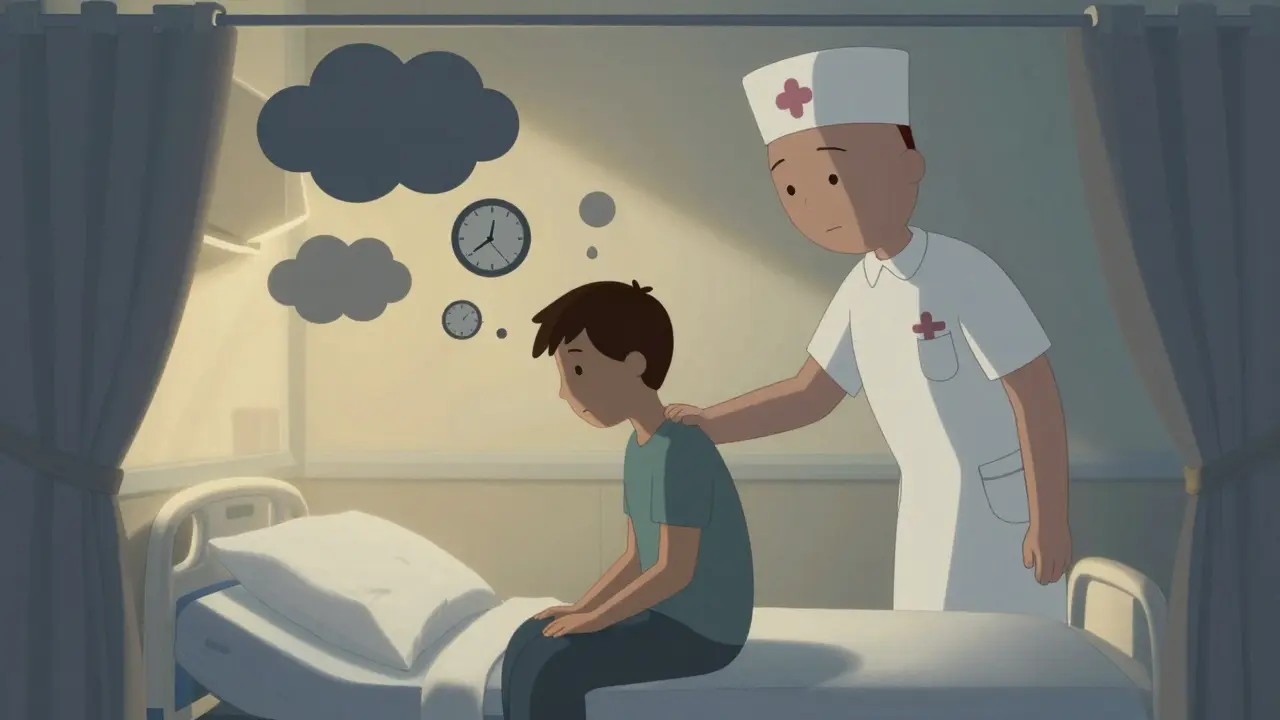
When someone survives a suicide attempt, the immediate aftermath is not a relief-it’s a fragile threshold. The body may be healing, but the mind is still in a storm. In the first hours and days, the most important thing isn’t to fix everything. It’s to make sure the person doesn’t have to face it alone. In the Czech Republic, where suicide attempts are one of the most common reasons for involuntary hospitalization, the system is slowly changing. But for those who’ve been through it-or for the people who care about them-the real work begins right after the hospital doors close.
První 72 hodin: Co je nejdůležitější?
The first three days after a suicide attempt are the most dangerous. Studies show that over half of all repeat attempts happen within the first two weeks. And the highest risk? The first 48 hours. That’s why the Czech psychiatric system pushes for immediate hospitalization when someone is at high risk. It’s not about punishment. It’s about safety.
On a psychiatric ward, the focus is simple: remove access to means, monitor closely, and start talking. Medication might be started if depression, psychosis, or severe anxiety is diagnosed. But the real turning point? A conversation with someone who doesn’t judge. A nurse who says, “I’m here.” A psychiatrist who asks, “What made you feel like you couldn’t go on?”-not “Why did you do it?”
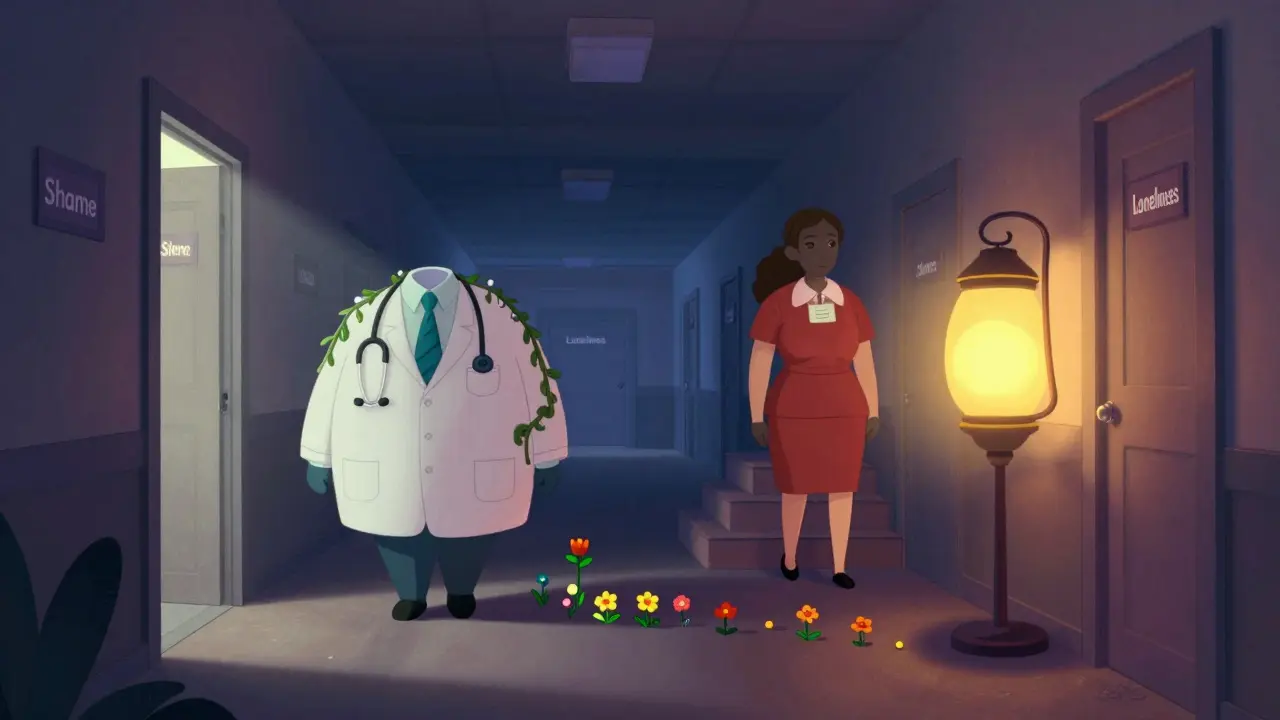
Many people feel shame after a suicide attempt. They think they’re weak. Or that they’ve failed. But the truth? The attempt was a signal. A desperate cry for help that got heard. And now, the work begins-not to erase what happened, but to understand why.
Hospitalizace: Proč je to potřeba a jak dlouho trvá?
In Czech hospitals, the average stay after a suicide attempt lasts between 14 and 28 days. That’s longer than most other medical stays. Why? Because recovery isn’t just about physical safety. It’s about rebuilding the ability to trust your own thoughts again.
On the ward, you’ll meet a team: a psychiatrist, a psychiatric nurse, a social worker, and sometimes a psychologist. They don’t just check your vitals. They check in on your mood, your sleep, your appetite. They ask: “Who do you call when you feel bad?” “What helps you calm down?” “Is there someone at home who knows what you’re going through?”
For children and teens, family involvement is mandatory. In clinics in Louny, Velká Bíteš, Opařany, or Motol in Prague, parents and siblings attend therapy sessions. Why? Because a suicide attempt in a teenager is rarely an isolated act. It’s often the result of long-standing family tension, school pressure, or feeling unheard. Healing happens together-or it doesn’t happen at all.
Co dělat po propuštění z nemocnice?
Leaving the hospital doesn’t mean the crisis is over. In fact, it’s often when things get harder. Suddenly, you’re alone again. The house feels too quiet. The silence feels heavy. And the fear? It doesn’t vanish just because you got a discharge paper.
This is where asertivní péče (assertive outreach) makes a difference. In cities like Prague, Brno, and Olomouc, teams from Mental Health Centers don’t wait for you to call. They come to you. They call. They show up at your door. They ask: “Did you take your medicine today?” “Did you eat?” “Do you need help getting to your next appointment?”
This isn’t about control. It’s about connection. People in deep depression often can’t get out of bed. They can’t make phone calls. They can’t even imagine asking for help. But if someone shows up, even just to sit with them for 20 minutes, the isolation breaks. And that’s when hope can creep back in.
Vytvoření bezpečnostního plánu: Krok za krokem
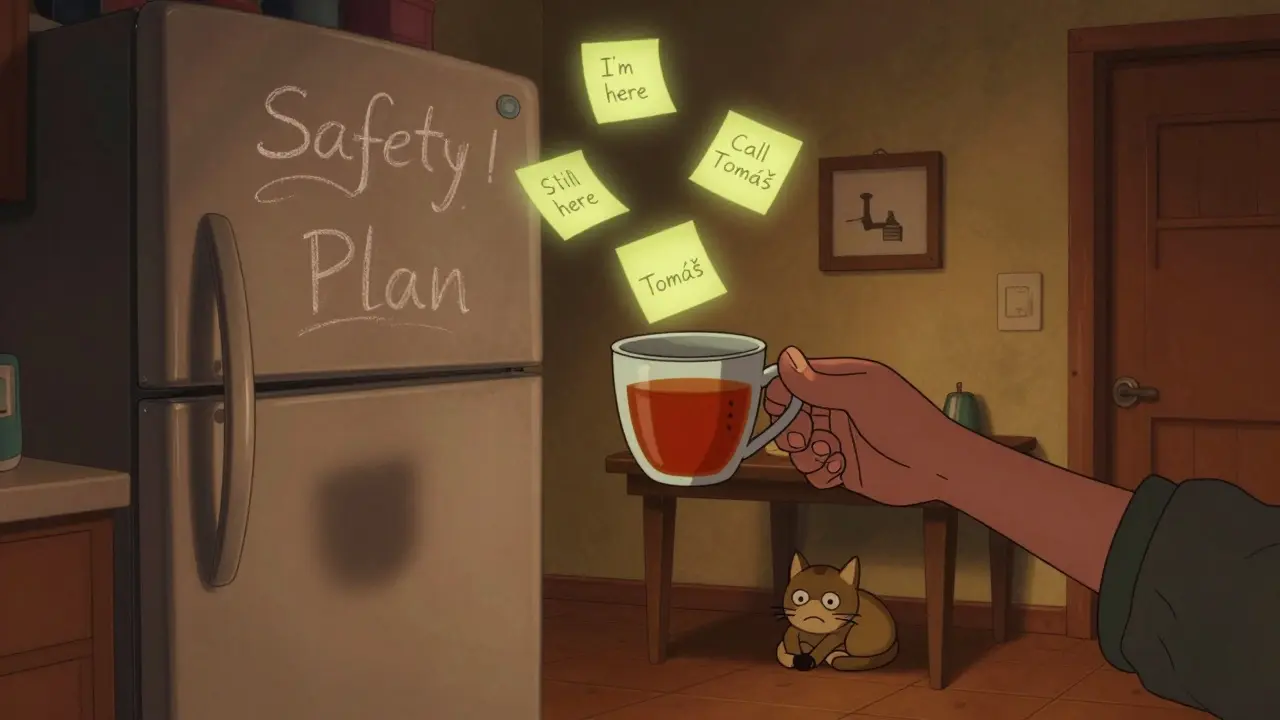
A safety plan isn’t a document you file away. It’s a living tool you carry in your phone, your wallet, or on your fridge. Here’s how to build one-with real examples from people who’ve done it:
- Identify warning signs: “When I start skipping meals,” “When I stop answering texts,” “When I can’t sleep for three nights in a row.”
- Internal coping strategies: “I take a cold shower,” “I listen to my grandma’s voice recording,” “I write one sentence in my notebook: ‘I’m still here.’”
- People to contact: “My sister,” “My therapist,” “The Crisis Line,” “My friend Tomáš who doesn’t judge.”
- Safe environment: “I gave my partner the keys to my meds,” “I locked away all sharp objects,” “I removed the pills from the bathroom cabinet.”
- Professional contacts: “My psychiatrist’s number is saved as ‘Dr. Votava’ with a star,” “I have the Crisis Line (116 123) on speed dial.”
One man from Ostrava told me: “I wrote my plan on a sticky note. I put it on my mirror. Every morning, I read it. Even if I didn’t feel like it. Even if I cried. I read it anyway.”
Co dělat, když jsi blízký?
If someone you love tried to end their life, you’re probably overwhelmed. Guilty. Scared. Angry. Confused. You might think: “I should’ve seen it coming.” Or: “I can’t fix this.”
The truth? You don’t have to fix it. You just have to be there.
Don’t say: “You shouldn’t have done that.” Don’t say: “It’s selfish.” Don’t say: “Be strong.”
Instead, say: “I’m here.”
Ask: “What do you need right now?”
Listen. Even if it’s silence. Even if it’s tears. Even if it’s anger.
And take care of yourself, too. You can’t pour from an empty cup. If you’re drowning in worry, find your own support. A therapist. A friend. A support group. Because no one is fully responsible for another person’s life. You can help. But you can’t carry it for them.
Podpora v České republice: Kde najít pomoc?
You’re not alone in this. There are systems in place, even if they’re still imperfect.
- Linka důvěry (116 123): Free, anonymous, 24/7. Trained volunteers listen. No judgment. No pressure.
- Centra duševního zdraví: In Prague, Brno, Ostrava, Plzeň, and now Olomouc, these centers offer intensive outpatient care. Teams visit homes. They coordinate care. They reduce hospitalizations by over 60%.
- Dětská psychiatrie: Louny, Velká Bíteš, Opařany, Motol in Prague. Family therapy is standard.
- Program “Nejsi sám”: Peer support from people who’ve survived their own attempts. 89% say they feel better after six weeks.
- Krizová intervence: Since January 2023, the “Krize bez hranic” pilot project has stabilized 92% of people without hospitalization. It’s expanding.
These aren’t perfect solutions. Waiting times are still too long. Therapists are overworked. But they’re real. And they work.
Proč se to zotavuje? A proč to trvá?
Recovery isn’t linear. Some days you feel okay. Other days, the darkness comes back. That’s normal.
One woman from Brno said: “After my attempt, I thought I’d feel better in a week. But it took months. And I cried every day. And that was okay. Because I was still alive. And that was enough.”
Healing takes time because the pain didn’t appear overnight. It built up over years-of loneliness, trauma, rejection, exhaustion. Undoing it won’t happen in a month.
But here’s the key fact: if you reach out for help within the first week, 78% of people report major improvement within three months. If you wait more than two weeks, your risk of another attempt triples.
That’s why the first days matter so much. Not because you have to “get over it.” But because you have to let someone in.
Závěr: Ty nejsi jenom přeživší. Jsi začínající.
A suicide attempt isn’t the end of your story. It’s a turning point. A brutal one. But a turning point nonetheless.
You don’t have to be brave. You don’t have to be strong. You just have to stay here. One day at a time. One breath at a time.
And if you’re reading this because you care about someone who tried-thank you. Your presence matters more than you know.
There’s no magic cure. But there is connection. And connection is the first step back to life.